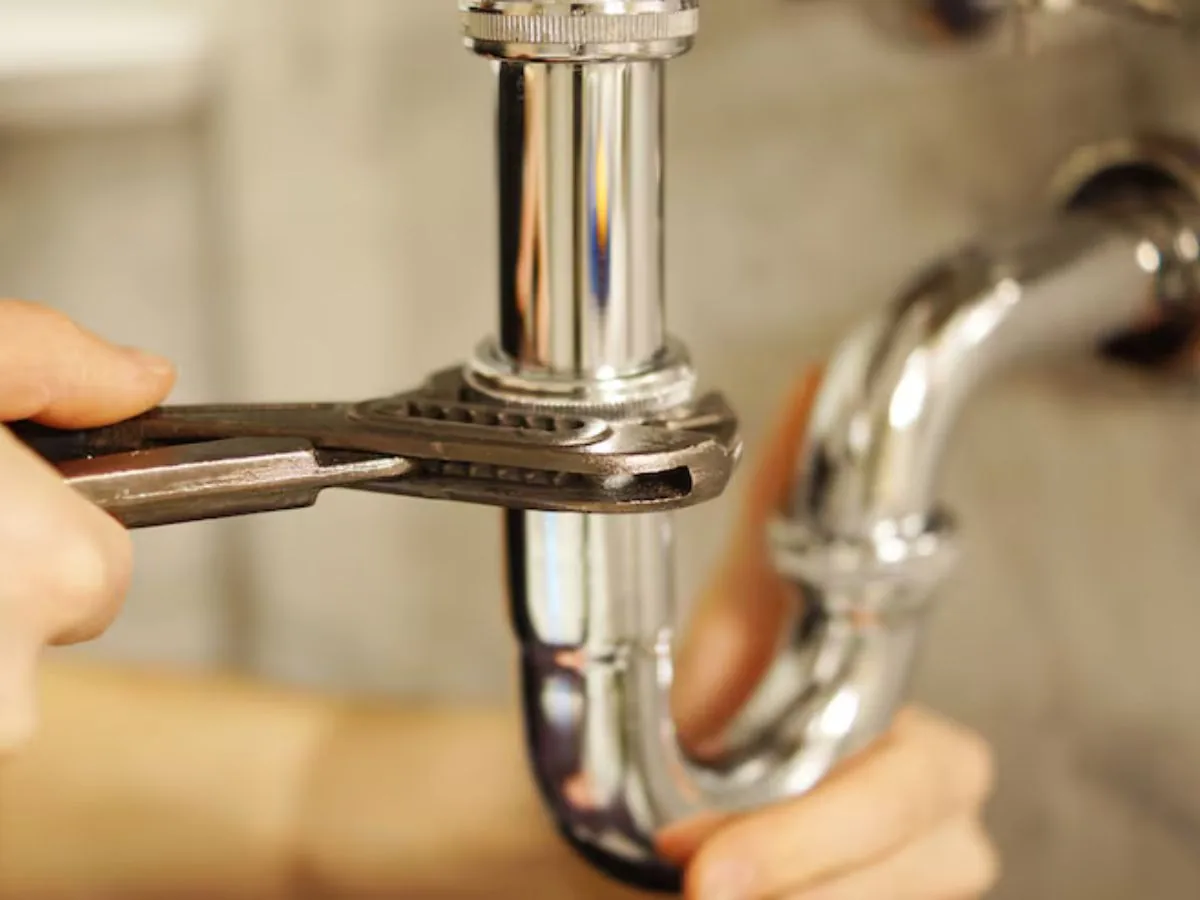
Faucet & Sink Repair in San Marcos, CA
A dripping faucet, a stiff or squeaky handle, or a sink that's slow to drain are some of the most common calls in any home, usually quick to diagnose and fix once the specific cause is identified, which in this area is very often mineral scale from hard water.
📞 24/7 Emergency Line OpenHow We Diagnose the Problem
Most faucet drips trace back to a worn cartridge, O-ring, or valve seat, parts that degrade faster in hard water areas because mineral scale accelerates wear on the small moving components inside a faucet. A sink that drains slowly but isn't fully clogged often has a partial obstruction right at the drain assembly rather than deeper in the line, which is a different fix than a full drain-cleaning call.
How a visit works
Call the 24/7 line
Describe the faucet & sink repair problem and we book the earliest visit.
We diagnose first
A plumber finds the actual cause first, so the scope and price are clear before work begins.
Repair or replace
You get plain options, a firm explanation, and the work done properly.
Signs You Need This Service
- A faucet that drips steadily even when fully closed
- A handle that's become stiff, loose, or squeaky to operate
- Reduced water flow at a specific faucet compared to others in the house
- A sink that drains slower than it used to, but isn't fully backed up
- Visible mineral buildup or white crust around the faucet spout or aerator
A Broken or Spraying Valve
A failed shutoff valve or supply line can flood a cabinet quickly.
- Close the main shutoff if the valve under the sink will not turn or holds nothing back.
- Turn off nearby appliances that use the same supply.
- Place a bucket and towels under the leak and clear the cabinet.
- Photograph the damaged valve or line so the plumber sees how it failed.
- Do not force a corroded valve, since it may snap.
Faucet & Sink Repair Pricing & What Affects It
Faucet cartridge or valve repairs are typically inexpensive compared to full fixture replacement, and often the more sensible choice unless the fixture itself is old enough that matching replacement parts is becoming difficult to source. We'll tell you honestly when repair no longer makes financial sense versus a straightforward fixture swap.
Why Faucets Wear Out Faster With Hard Water
The small internal parts inside a faucet, cartridges, O-rings, and valve seats, are designed to seal tightly against smooth surfaces, and mineral scale from hard water gradually roughens and coats those surfaces, leading to leaks and stiff operation well before the fixture's expected lifespan. This is one of the more visible everyday effects of San Diego County's water hardness.
Aerator Cleaning as a First Step
A faucet with reduced flow that isn't actually leaking often just has a clogged aerator, the small mesh screen at the tip of the spout, filled with mineral deposits. This is a simple fix that's worth ruling out before assuming a bigger internal problem.
Sink Drain Assemblies vs. Full Drain Lines
A slow-draining sink is sometimes a localized issue right at the drain stopper or basket assembly rather than a clog further down the line, these are cleaned or replaced separately from a full drain-cleaning service, and it's worth distinguishing the two before assuming a bigger job is needed.
Faucet Handle Types and Repair Approach
Compression, cartridge, ball, and ceramic disc faucets each fail in different ways and use different internal parts, which is why identifying the specific faucet type is one of the first steps before sourcing a replacement part, using the wrong repair kit for a given faucet type is a common source of a repair that doesn't hold.
Pull-Down and Pull-Out Kitchen Faucets
Kitchen faucets with a pull-down or pull-out sprayer have additional internal components, the hose, the weight that retracts it, and the diverter valve that switches between stream and spray, that regular faucets don't, and issues specific to these features (a sprayer that won't retract, or reduced flow only in spray mode) require checking those particular parts rather than assuming it's the same cartridge issue as a standard faucet.
Bathroom Sink Pop-Up Assemblies
A bathroom sink's pop-up drain stopper has its own linkage connecting it to the lift rod at the faucet, and a stopper that won't seal properly or stay open is usually a linkage adjustment rather than a sign of a deeper plumbing issue, a small, often overlooked repair that's frequently mistaken for something more involved.
Faucets Wear Out Differently by Neighborhood
Hard water scale is the most common cause. In older Lake San Marcos homes, the faucets may be original to the 1970s. In San Elijo Hills, the fixtures are newer but still collect scale quickly.
Parts availability decides repair or replacement. We tell you honestly when a fixture is past saving.
A Dripping Faucet, Worn Cartridge or Loose Handle
Most drips come from a worn cartridge, washer or seal inside the faucet body. A handle that wobbles or a spout that leaks at the base points to a different part.
Replacing the worn component restores the faucet in many cases. If the finish is pitted or the body is corroded, replacement is the cleaner answer.
Under-Sink Valves and Supply Lines
The small valves under a sink wear out and often will not close when you need them. A stuck or leaking valve is a repair that is easy to do before an emergency, and harder during one.
Hose connections to dishwashers, refrigerator lines and washing machines have their own fittings, and leaks there are a common reason people call.
Outdoor Spigots and Hose Bibs
A spigot that drips when closed or sprays from the stem needs the packing or the whole valve replaced. If the pipe behind the wall is leaking, the repair is more involved. For wider pipe issues see the general plumbing repair page.
Frequently Asked Questions
If parts are still readily and easily available and the fixture itself is otherwise in good working shape overall, repair is usually the more economical choice. Once matching parts become genuinely hard to source, replacement often makes more practical and financial sense.
Pressure fluctuations overnight can make a marginal seal more noticeable, but a faucet that's truly dripping needs the same repair regardless of when it's most noticeable.
Yes, over time, even quality fixtures aren't immune to scale buildup on internal components in a hard-water area, which is why periodic maintenance matters even on newer installations throughout the home.
Yes, that is routine plumbing work. The main water supply may need to be shut off during the swap, and the plumber will tell you how long that takes.
Supply lines and their valves can be repaired or replaced. Tell the dispatcher which appliance it is and where the water appears.
Yes, spigot repair and replacement are normal faucet work. If the leak is behind the wall, mention any stained siding or wet soil near the foundation.
It depends on the rate. A slow drip can wait for a scheduled visit if you place a bucket and monitor it. A steady stream or a spraying line calls for shutting the water off and calling right away.